Wallis Simpson Panther That Forced A King To Abandon His Entire Throne
The Bracelet That Became The Armor Of A Woman Who Bent A Global Empire
Ayssar Al Shihabi
7/20/20264 min read
When the mass market imagines an expensive bracelet, they picture a heavy block of gold covered in diamonds, designed specifically to catch the eye of a stranger across a crowded room. They view it as a transaction. A loud accessory meant to demand validation.
But if you view the world through the unbothered, analytical lens of the Sigma mindset, you know that luxury is never about shouting for attention. It is about the absolute mastery of an internal standard. At the very pinnacle of the high jewelry market, a bracelet is not an accessory. It is a wearable sculpture, a masterclass in engineering, and a heavy historical artifact.
If you analyze the 12 most expensive and beautiful bracelets in the world, you realize that legendary houses like Cartier, Bulgari, and Van Cleef & Arpels do not just sell stones. They sell mythology, leverage, and uncompromising craftsmanship.
How value is constructed at the apex of the market, moving from foundational icons to multi million dollar relics?!
Foundation of Understated Power
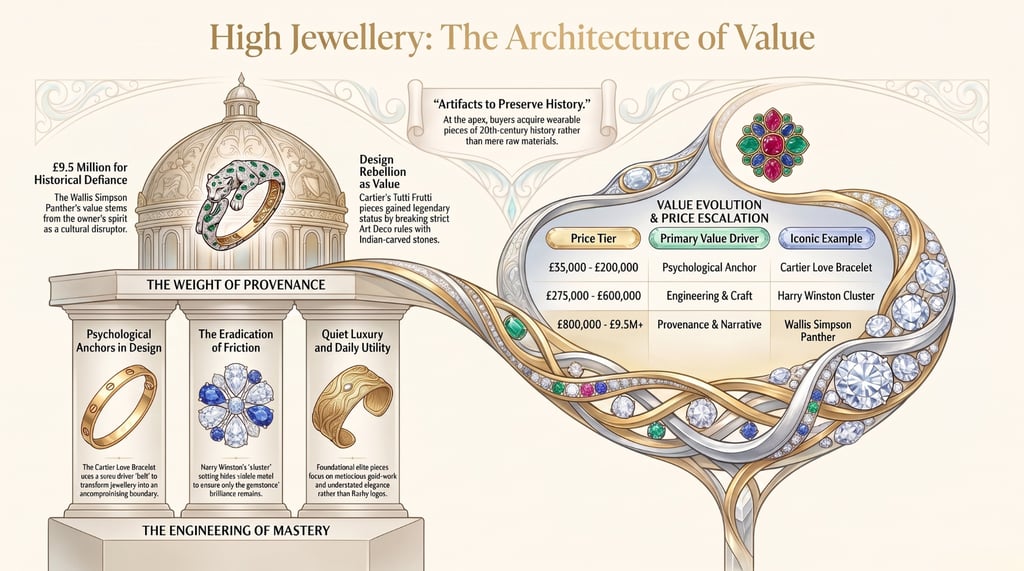
At the entry point of the elite tier (ranging from $70,000 to $250,000), the strategy is not about overwhelming the eye. It is about quiet elegance and powerful psychological anchors. The Sigma consumer gravitates toward this level because it offers daily utility without sacrificing the absolute standard.
Van Cleef & Arpels Perlée Bracelet ($70,000): This is the definition of quiet luxury. It lacks flashy logos or massive center stones. Instead, it relies on meticulously polished gold beads, appealing exclusively to those who appreciate understated, practical elegance.
Cartier Diamond Love Bracelet ($150,000): The diamond encrusted evolution of the 1970s classic. The true genius of the Love bracelet is psychological: it requires a tiny screwdriver to lock it onto the wrist. By forcing the wearer to literally be bolted into the jewelry, Cartier transformed a simple bangle into an uncompromising boundary and an emblem of devotion.
Bulgari Serpenti Diamond Bracelet ($250,000): The snake is an ancient Roman symbol of rebirth, silent strength, and seductive charm. Crafted from articulated links of white gold and diamonds with piercing emerald eyes, it provides a sleek, armor-like aesthetic for the independent mind.
Eradication of Friction
Moving into the mid-tier ($350,000 to $750,000), the focus shifts entirely to the engineering of the craft. True luxury demands that you make the impossible look effortless by hiding the mechanics.
Chaumet Joséphine Aigrette Bracelet ($350,000): Chaumet leverages its heavy historical weight as the official jeweler to Napoleon. This piece honors Empress Joséphine by taking a traditional feathered headpiece (the aigrette) and reimagining it into a modern, fanning silhouette of diamonds.
Piaget Rose Passion Bracelet ($600,000): A masterclass in sculptural translation. Piaget takes the soft, ephemeral beauty of a rose and immortalizes it in cold, hard white gold and vibrant pink sapphires.
Harry Winston Diamond Cluster Bracelet ($750,000): Winston revolutionized the industry with the “cluster” setting. He engineered a way to combine pear, marquise, and round-cut diamonds that practically eliminated visible metal. When you have perfect stones, the metal is just a distraction. Winston hid the friction so only the brilliance remained.
Weight of Provenance
When a piece crosses the million dollar threshold, raw carat weight ceases to be the primary driver of value. The price tag is now dictated by provenance, the cultural narrative and historical gravity embedded in the metal.
Van Cleef & Arpels Ruby & Diamond : A quiet emotional narrative using fiery oval cut rubies for passion and diamonds for eternity. The Value: ~$1 Million.
Cartier Tutti Frutti: Born in the 1920s, this piece broke the strict rules of Art Deco by integrating wildly carved Indian emeralds and rubies. It is a symbol of successful design rebellion. The Value: $1.3 Million.
The 1928 Cartier Diamond Bracelet: A genuine, geometric platinum relic of the Art Deco era that survived the 20th century, gracing the wrists of royalty before hitting the auction block. The Value: $2.2 Million.
Bulgari Emerald & Diamond: A staggering showcase of dominance over raw materials, featuring perfectly matched, flawlessly clear rich green emeralds that simply cannot be replicated on demand. The Value: $8 Million.
The Wallis Simpson Panther
The list culminates in a single piece that perfectly defines the Sigma approach to luxury: an item whose value is entirely inseparable from the rebellion and power of its owner.
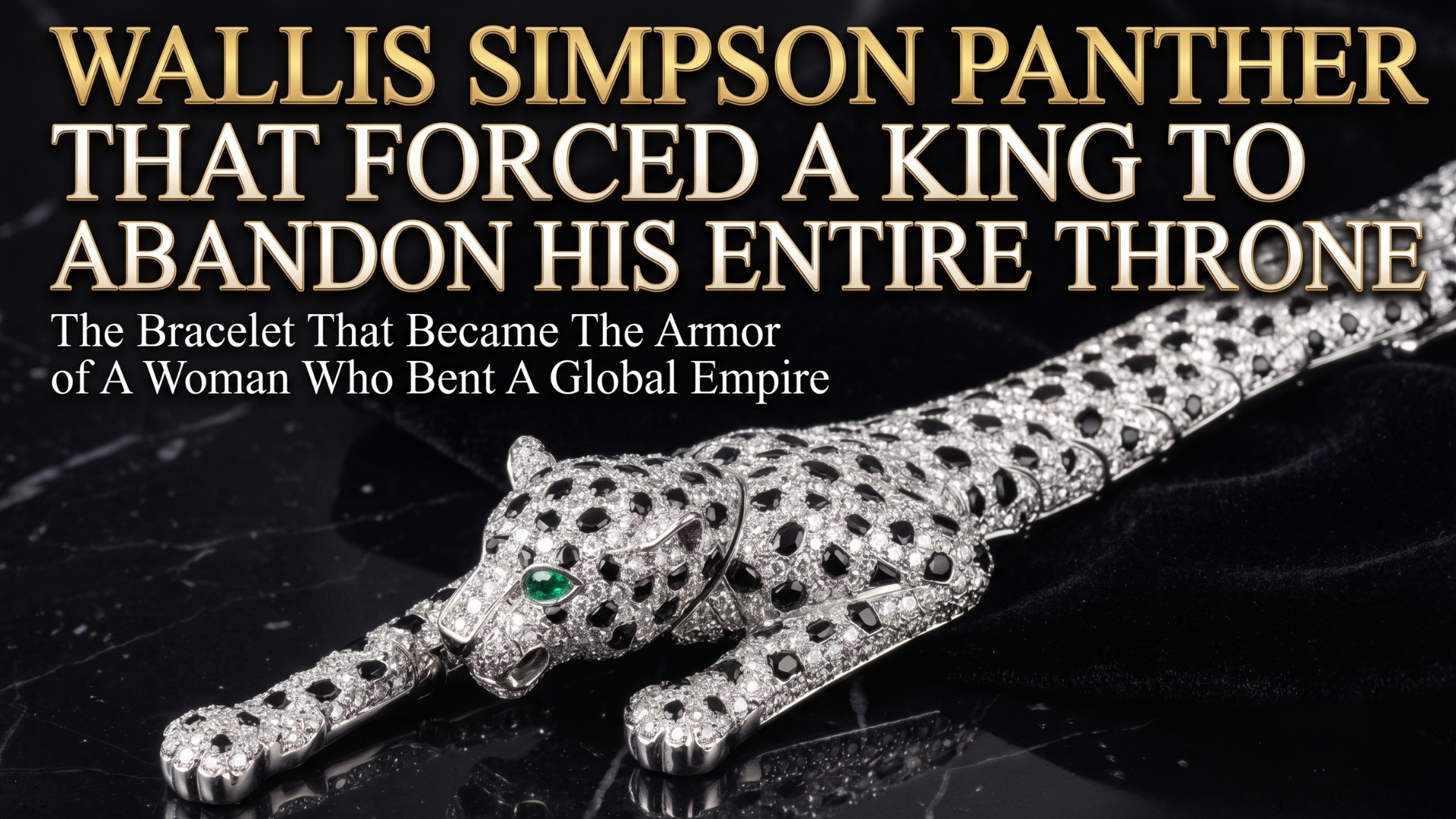
In 1952, Cartier created the Onyx & Diamond Panther Bracelet for Wallis Simpson, the Duchess of Windsor. Wallis was the ultimate cultural disruptor, an unapologetic American divorcée whose romance was so fiercely undeniable that it forced King Edward VIII to abdicate the British throne.
The panther coils fluidly around the wrist on flexible joints, covered in pavé diamonds, smooth onyx spots, and hypnotic emerald eyes. It is not just a piece of jewelry. It is an emblem of defiance. It is the armor of a woman who bent a global empire to her will.
When this piece sold at Sotheby’s for $12.4 million, the buyer was not paying for the diamonds. They were paying for the spirit of the Duchess. They were buying a wearable piece of 20th century history and Cartier’s absolute design supremacy.
-----
The mass market buys jewelry to prove they have money. The elite acquire artifacts to preserve history.
When you strip away the marketing, luxury is always about the myth you create and the uncompromising standard you maintain.
Remember that your ultimate value will never be calculated by the raw materials alone. It will be calculated by the weight of your story.