
Tarmac Lesson That Applies To Luxury Brands Marketing And Professional Value
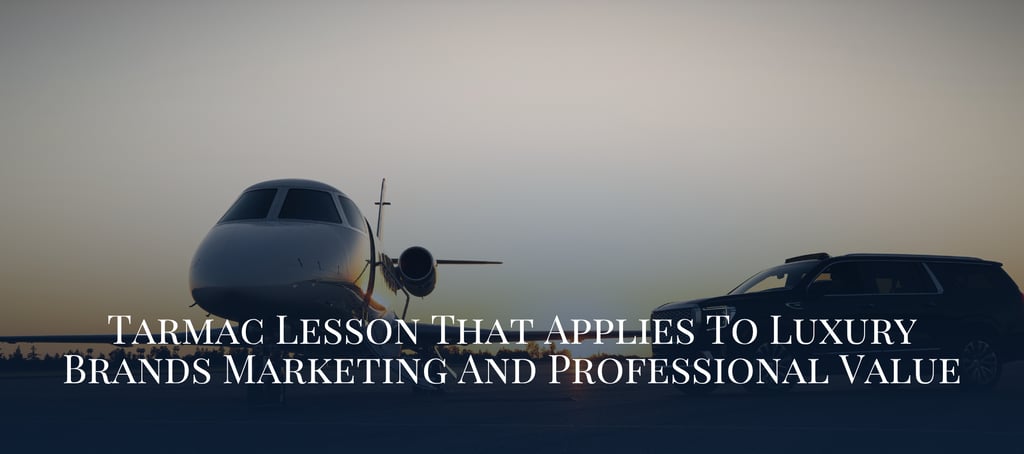
There is a distinct, almost unnatural silence that occurs the moment the engines of a private jet spool down on the tarmac.
For the average observer, private aviation is a symbol of excessive wealth, a flashy display of status. But for those who actually operate within this sphere, and for those who study the architecture of the luxury mindset, it is about something entirely different. It is not about the aircraft. It is about the mastery of the one resource that even billionaires cannot print more of: Time.
Recently, while analyzing the mechanics of elite service within an FBO (Fixed Base Operator) environment, I noted a powerful philosophy: “When they step off their aircraft onto a red carpet, they immediately feel special… Time is a luxury for our clients, and we design every touchpoint around that reality.”
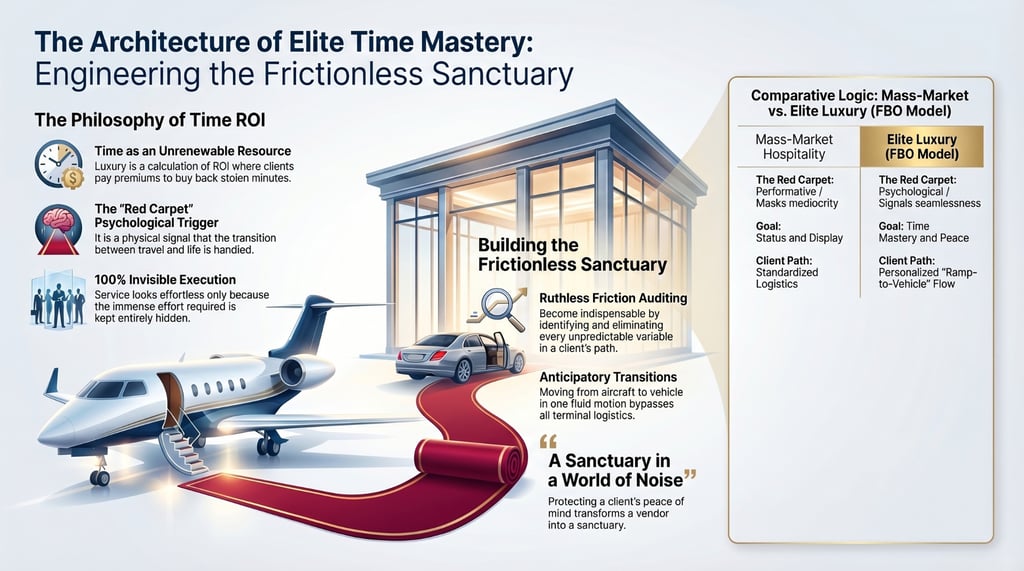
To the untrained eye, a red carpet rolled out on the tarmac is just a piece of fabric. It is a theatrical gesture. But through the Sigma lens, we recognize it for what it truly is: a psychological trigger. It is a physical manifestation of a much deeper, invisible system designed to eliminate friction.
How luxury is manufactured in the spaces where time is the ultimate currency?
The Redefinition of the “Red Carpet”
In mass-market hospitality, a red carpet is often used to mask a mediocre experience. It is performative.
But in the realm of luxury, the “red carpet” is not about making someone feel like a celebrity; it is about making them feel entirely unburdened. When a client steps off an aircraft, they are transitioning between worlds, from the isolated airspace back into the demands of their business or personal life. The physical carpet signals that the transition has been handled. It says, without a word being spoken: We have anticipated your arrival. You do not need to think about what happens next.
The Architecture of Seamlessness
The hallmark of a premium FBO experience is the car waiting directly on the ramp, engines running, just steps from the aircraft stairs.
This is the exact point where luxury transcends product and becomes an engineered reality. The client bypasses the terminal, the baggage claim, the waiting areas, and the unpredictable variables of public transport. They step out of a cabin and directly into a waiting vehicle, moving from travel to a high-stakes meeting or the sanctuary of their home in one fluid motion.
This level of seamlessness requires an obsessive attention to detail from an empowered team working entirely behind the scenes. Luxury looks effortless to the client precisely because the immense effort required to execute it is kept entirely invisible.
The Psychology of the Unrenewable Resource
Why do ultra high net worth individuals pay astronomical premiums to utilize FBOs instead of commercial first class?
It is a calculation of ROI. Time is a luxury, but more accurately, it is the ultimate unrenewable resource. Every minute spent waiting in a security line, tracking down a driver, or navigating terminal logistics is a minute stolen from their productivity, their strategy, or their peace of mind.
By designing every single touchpoint around the preservation of time, the FBO is not just providing a travel service; they are selling back minutes and hours of a client’s life. They are selling peace.
The Sigma Takeaway
Whether you are managing a luxury brand, directing marketing strategies, or building your own professional value, the lesson of the tarmac applies universally.
The most powerful way to become indispensable to high-level clients is not to offer them more products or louder marketing. It is to audit their experience and ruthlessly eliminate their friction. When you protect someone’s time, anticipate their transitions, and execute flawlessly in the background, you stop being a vendor. You become a sanctuary.
And in a world defined by noise and chaos, a frictionless sanctuary is the highest form of luxury.
Luxury
Expertise in luxury marketing and brand transformation.
Strategy
© 2025. All rights reserved.