
How To Transform From Emotional Buyer To Strategic Luxury Investor
Luxury brands are masters of storytelling. They want you to believe that every item is a timeless investment, handcrafted by an old master in a small Italian village, and built to last forever.
While some of that is true, much of it is a carefully designed illusion. A Sigma strategist doesn’t buy based on emotion alone; they buy based on intel. They know which pieces are assets and which are just expensive fast fashion in a fancy box.
Behind the Velvet Curtain
Elena: Look at this, Ayssar. It’s an investment. The tag says “Made in Italy,” and the sales girl told me it was handcrafted by artisans. This will be worth double in five years.
Ayssar: (Taking a sip of water) It’s a beautiful bag, Elena. But as a strategist, I have to ask: Are you buying the object or the illusion?
Elena: (Confused) What do you mean? It’s a luxury brand. Luxury always holds its value, doesn’t it?
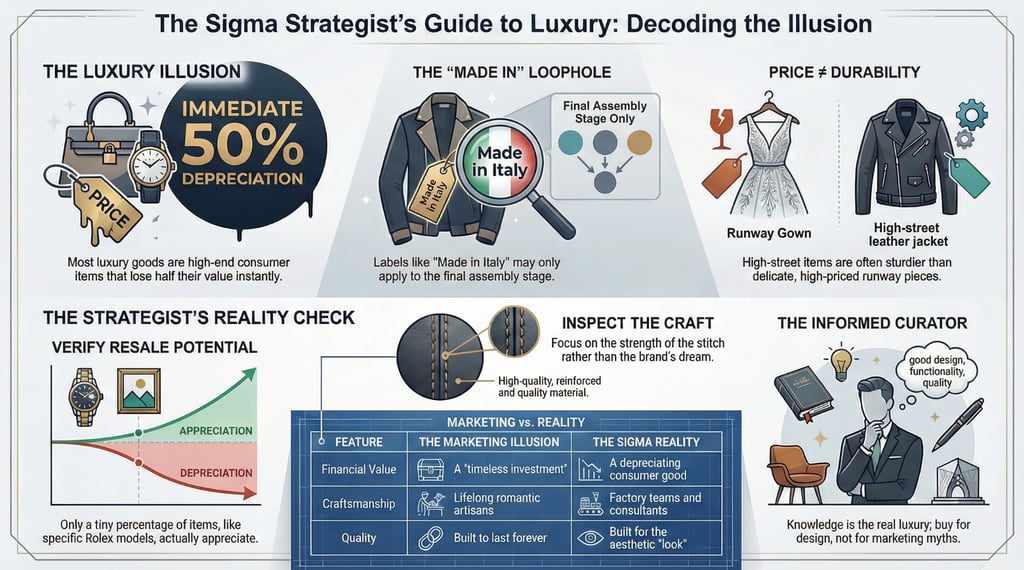
Ayssar: That is the first thing they want you to believe. Only a tiny percentage of luxury items, like specific Hermès or Rolex models, actually appreciate. Most luxury items depreciate by 50% the moment you walk out that door. They aren’t stocks; they are high-end consumer goods.
Elena: Well, at least it will last forever. It’s heritage quality.
Ayssar: Not necessarily. Expensive does not always mean durable. Many luxury pieces are made for the look, not for a lifetime of use. Sometimes a simple high-street coat is built more sturdily than a delicate runway piece. You are paying for the design and the dream, not always the strength of the stitch.
Elena: But the tag! It’s “Made in Italy.” That means it was made in a traditional workshop, right?
Ayssar: (Leaning forward) Not always. Under EU rules, a brand can use that label if only the last major change happened in Italy. The rest of the bag could have been stitched thousands of miles away. And those artisans? Often, they are trend consultants and factory teams, not the romantic lifelong craftsmen you see in the commercials.
Elena: (Looking at the bag differently) So… the luxury is just a story?
Ayssar: A Sigma personality knows that knowledge is the real luxury. I’m not saying don’t buy it. I’m saying know the truth before you buy. If you love the design and the story, buy it. But don’t mistake a clever marketing campaign for a financial asset or a miracle of engineering.
Elena: I feel like the magic is a bit gone now.
Ayssar: On the contrary. Now the power is in your hands. You are no longer a customer being told what to think. You are a curator making an informed choice. That is the ultimate luxury mindset.
The Power of the Informed Buyer
The lesson isn’t meant to kill the joy of luxury; it’s meant to elevate your intelligence. The Sigma strategist appreciates the beauty of the high-end world but refuses to be a victim of its myths. When you understand the difference between value, quality, and marketing, you stop being a follower and start being a leader of your own lifestyle.
Key Takeaway
Luxury brands sell stories, not just products. Before you invest, do your research:
Check the Resale: Not everything is an investment.
Inspect the Craft: Don’t assume high price equals high durability.
Verify the Source: Understand that “Made in…” labels have technical loopholes.
The luxury is knowing the truth before you pay for the dream.
Luxury
Expertise in luxury marketing and brand transformation.
Strategy
© 2025. All rights reserved.