
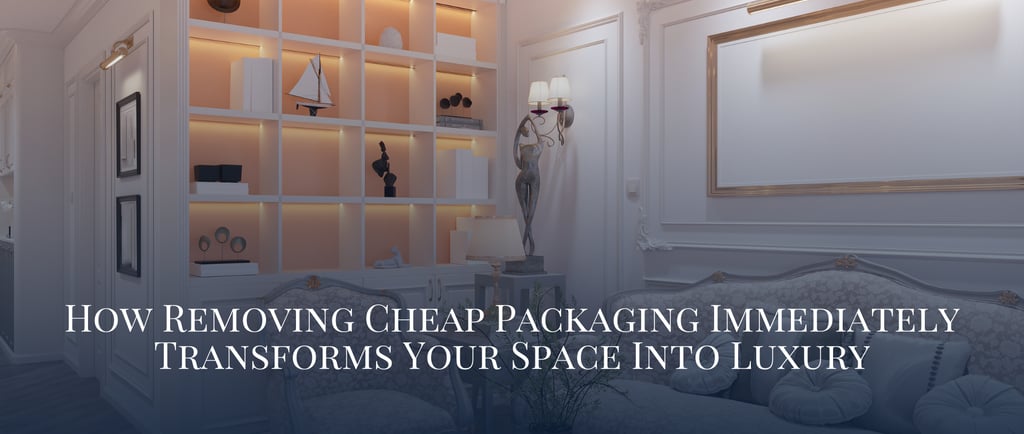
How Removing Cheap Packaging Immediately Transforms Your Space Into Luxury
Most people believe that to make a home look luxurious, they need to buy giant chandeliers or expensive sofas. But the luxury hides in the corners. It hides on the kitchen counter and next to the bathroom sink.
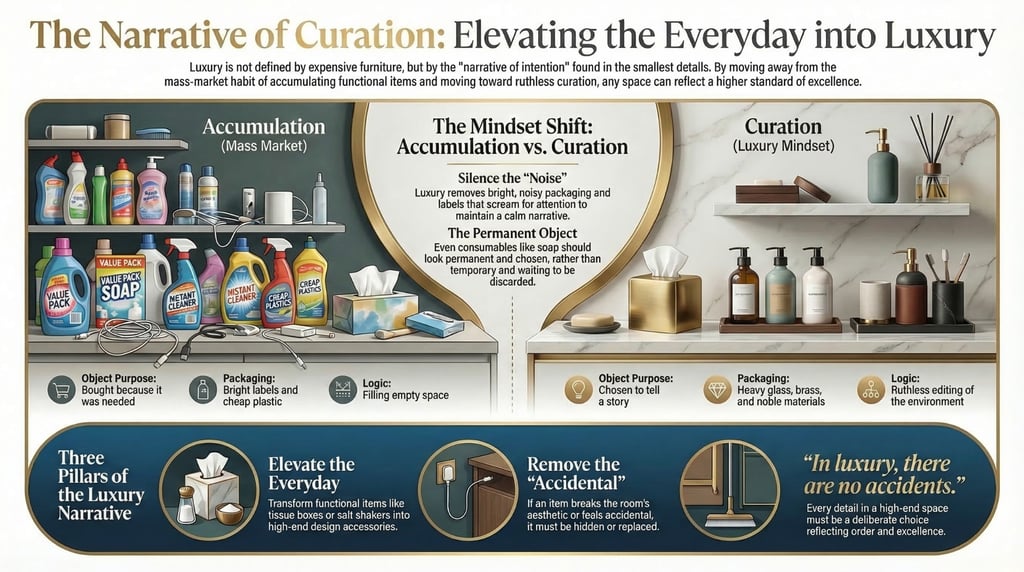
When you walk into a middle-class home, you see accumulation, things bought simply because they were needed, with bright labels and cheap packaging. But when you walk into a luxury home, you see curation. Every item, even the hand soap, acts as a deliberate accessory. A Sigma strategist knows that a single accidental object can break the entire narrative of a room.
Curation vs. Accumulation
Elena: This house is stunning. But I just noticed something funny. Even the hand soap sitting on this marble counter looks like a piece of art. It’s in a heavy, dark glass bottle on a small brass tray. It almost feels too nice to use.
Ayssar: (Standing in the doorway, my tone calm and observant) That is exactly the point, Elena. That soap is not just there to wash hands. It is an accessory.
Elena: But it’s just soap. It is a consumable. You use it up and throw it away.
Ayssar: That is how the mass market thinks. A middle-class space is filled with items that look like they are waiting to be used up. Plastic bottles with bright, noisy labels that scream for attention. But in a luxury environment, an object must look like it was chosen. It must look permanent.
Elena: So they put the soap in a beautiful bottle so it matches the aesthetic of the room?
Ayssar: Precisely. In a high-end space, even the smallest object contributes to the status narrative. A tray, a candle, a soap dispenser, each one signals intention. If you spend a fortune on a beautiful marble sink, but you place a cheap, ugly plastic bottle on top of it, you instantly break the illusion of luxury.
Elena: It really is about the details, isn’t it? It makes the whole room feel more intentional.
Ayssar: Yes. The mistake most people make is that they accumulate. They just buy things to fill space. But luxury is about curation. We edit the space ruthlessly.
Elena: Edit the space?
Ayssar: We remove the noise. If an object does not add to the story of the room, it does not belong there. You don’t need a hundred beautiful things. You just need to make sure that the few things you do have, even the everyday items, are unmistakable.
The Narrative of Intention
The lesson is simple but profound: Luxury is curation, not accumulation. The Sigma mindset demands that your environment reflects your internal standard of order and excellence. You do not let random, ugly items invade your space just because they are functional. By elevating the everyday objects, you elevate your entire daily experience.
Key Takeaway
Everything in your space tells a story.
Curate, Don’t Accumulate: Stop filling your home with random items. Buy fewer things, but make sure every single one is chosen with care.
Elevate the Everyday: Treat functional items (like soap, salt shakers, or tissue boxes) as design accessories. Remove cheap packaging immediately.
Edit the Noise: If an item looks accidental or breaks the aesthetic of the room, hide it or replace it.
In luxury, there are no accidents. Every detail is a deliberate choice.
Luxury
Expertise in luxury marketing and brand transformation.
Strategy
© 2025. All rights reserved.